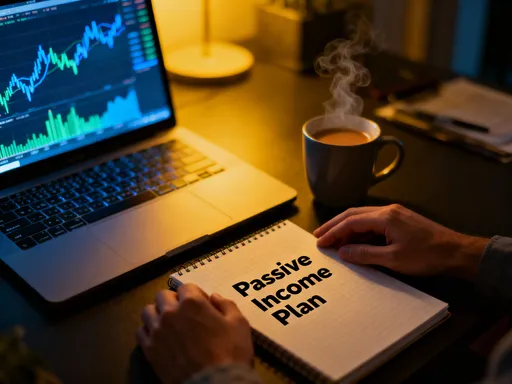
How I Stopped Gambling on Stocks and Built a Real Portfolio
Remember when I thought picking hot stocks was the way to get rich? Yeah, that didn’t end well. I lost more than I care to admit before realizing something: investing isn’t about luck—it’s about structure. This is the exact path I took from panic-driven trades to a balanced, stress-free portfolio. No jargon, no hype—just what actually works. If you're tired of rollercoaster returns and want real control, let’s walk through this together.
The Wake-Up Call: Why Chasing Gains Almost Broke Me
There was a time when I believed that quick decisions and bold moves were the key to financial success. Every market surge felt like an invitation to jump in, and every dip seemed like a clearance sale. I treated my brokerage account like a personal slot machine—constantly refreshing stock prices, chasing headlines, and holding my breath after each trade. When a meme stock I’d bought surged 20% in a week, I felt like a genius. But within a month, it had dropped 40%, dragging my confidence down with it. The emotional swings were exhausting. I wasn’t building wealth—I was riding a rollercoaster of hope and dread.
One year stands out in my memory. By July, I was up nearly 25%, fueled by a few high-risk tech picks and some lucky timing. I started imagining early retirement, a new kitchen, maybe even a family vacation abroad. But the second half of the year brought sharp corrections. My portfolio wobbled, then collapsed back to nearly flat. I ended the year with nothing to show for all the stress, sleepless nights, and obsessive screen-watching. That was the wake-up call. I realized I wasn’t investing—I was gambling. The difference? Investing is systematic, patient, and grounded in long-term strategy. Gambling is reactive, emotional, and driven by short-term noise.
The financial loss was painful, but the emotional toll was worse. I felt anxious every time the market moved. I’d wake up and check my phone before even getting out of bed, dreading red numbers. My confidence in my own judgment eroded. I started questioning whether I was cut out for managing money at all. That’s when I began to understand the true cost of undisciplined investing—not just in dollars, but in peace of mind. Real wealth isn’t built on adrenaline rushes or viral stock picks. It’s built on consistency, patience, and a clear plan. I finally accepted that if I wanted lasting results, I needed structure. And the foundation of that structure? Asset allocation.
What Asset Allocation Really Means (And Why It’s Not Boring)
When I first heard the term “asset allocation,” I assumed it was something only financial advisors discussed in boardrooms. It sounded technical, dry, and completely unrelated to my life. But the truth is, asset allocation is one of the most powerful tools any investor can use—and it’s much simpler than it sounds. At its core, asset allocation is about deciding where your money lives. It’s the process of dividing your investments among different categories—like stocks, bonds, cash, real estate, and possibly alternative assets—based on your goals, risk tolerance, and time horizon.
Think of your portfolio like a symphony. Each asset class is an instrument. Stocks might be the violins—capable of soaring highs and dramatic movements. Bonds are the cellos—steady, reliable, and grounding. Cash is the percussion, always ready to act when needed. When one section plays too loudly—say, stocks surging during a bull market—the others help keep the overall sound balanced. If you put all your money in one asset class, like an orchestra with only violins, the performance might be thrilling at first, but it’s unstable and unsustainable.
I learned this the hard way. At one point, my portfolio was 90% tech stocks. I told myself I was “future-focused” and “growth-oriented.” But when the market turned, my account dropped 35% in just a few months. I watched helplessly as months of gains evaporated. That’s when I understood: diversification isn’t about maximizing returns—it’s about managing risk. By spreading my money across different asset classes, I wasn’t trying to win the lottery. I was building a financial safety net. I didn’t get rich overnight, but I stopped the bleeding. I no longer lost sleep over every market dip because I knew not all my eggs were in one volatile basket.
Asset allocation isn’t exciting in the moment. It won’t make headlines or go viral on social media. But over time, it provides stability, reduces emotional decision-making, and increases the odds of long-term success. It’s not a magic formula, but it is a proven strategy used by institutional investors and retirement funds worldwide. The key is to choose a mix that aligns with your personal situation—not someone else’s hype.
Mapping Your Risk Tolerance: It’s More Than Just “How Much Can You Lose?”
I used to think I had a high risk tolerance. I’d say it confidently: “I’m aggressive. I can handle volatility.” But then the market dropped 15% in a month, and I panicked. I sold some holdings at a loss, telling myself I was “cutting my losses,” when in reality, I was reacting to fear. That moment taught me a critical lesson: your stated risk tolerance isn’t the same as your actual risk tolerance. What you say during calm markets doesn’t matter as much as how you behave when the storm hits.
True risk tolerance is a combination of three factors: your financial capacity to absorb loss, your time horizon, and your emotional resilience. The first—capacity—is about your financial situation. Do you have an emergency fund? Are your essential expenses covered? If you’re relying on investment returns to pay next month’s rent, you can’t afford high risk, no matter how “aggressive” you claim to be. The second—time horizon—refers to how long you can leave your money invested. If you’re saving for a goal five years away, you have less room for error than someone saving for retirement 30 years from now. The third—emotional resilience—is the hardest to measure but often the most important. Can you watch your portfolio drop 20% and still stick to your plan? Or will you sell in a panic?
To assess my real risk tolerance, I started asking myself honest questions. What would happen if my portfolio dropped 20%? Could I still afford groceries, utilities, and my mortgage? How would I feel? Would I lose sleep? Would I make impulsive decisions? I also considered my life stage. As a parent with two children and a home to maintain, I realized I couldn’t afford to take reckless risks. Stability wasn’t a sign of failure—it was a necessity. I didn’t need to chase 30% returns when 6-8% per year, compounded over time, could still grow my wealth significantly.
Once I accepted my true risk profile, I adjusted my portfolio accordingly. I reduced my exposure to volatile stocks and increased my allocation to bonds and dividend-paying funds. This didn’t make me less ambitious—it made me more realistic. I stopped comparing myself to others who claimed huge gains from risky bets. Instead, I focused on building a portfolio I could live with, even during downturns. Knowing my limits didn’t shrink my dreams—it protected them.
Building Your Core: The Foundation of a Resilient Portfolio
After years of chasing trends and reacting to news, I realized I needed a foundation—a financial home base that didn’t require constant tinkering. That’s when I shifted my focus to building a core portfolio. The core is the stable, long-term portion of your investments—the part you don’t touch unless your life circumstances change dramatically. For me, this meant shifting from individual stock picking to low-cost index funds and exchange-traded funds (ETFs) that track broad market segments.
Index funds are designed to mirror the performance of a market index, like the S&P 500. Because they’re passively managed, they have much lower fees than actively managed funds. Over time, lower fees mean more of your money stays invested, compounding quietly in the background. I chose a mix of U.S. total stock market funds, international stock funds, and bond index funds. Together, they represent a diversified slice of the global economy. This core doesn’t promise explosive growth, but it offers steady, reliable exposure to long-term market trends.
One of the biggest benefits of a core portfolio is simplicity. I no longer spend hours researching individual companies or trying to predict the next big thing. Instead, I trust the market’s overall trajectory. Historically, the stock market has delivered average annual returns of about 7-10% over long periods, even with downturns. By staying invested in a diversified core, I position myself to benefit from that growth without needing to be right about any single stock or sector.
I also set a rule: I rebalance my core twice a year. This means I review my allocations and make small adjustments to bring them back in line with my target. If stocks have performed well and now make up a larger share of my portfolio than planned, I sell a little and buy more bonds or underperforming assets. This keeps my risk level consistent and prevents any one area from dominating my holdings. Building a core wasn’t about giving up on growth—it was about creating a solid base from which growth could happen naturally, without constant intervention.
The Hidden Power of Rebalancing (And Why I Ignore It at My Own Risk)
When I first heard about rebalancing, I thought it sounded tedious—like financial housekeeping with no real payoff. Why sell an asset that’s doing well? Why buy one that’s lagging? It felt counterintuitive. But over time, I realized rebalancing is one of the most powerful, underappreciated tools in investing. It’s the closest thing to a disciplined, emotion-free strategy for buying low and selling high.
Here’s how it works. Let’s say your target allocation is 60% stocks and 40% bonds. Over a strong stock market year, your portfolio might shift to 70% stocks and 30% bonds because equities grew faster. That means you’re now taking on more risk than intended. Rebalancing forces you to sell a portion of your appreciated stocks and use the proceeds to buy more bonds. You’re selling high. Conversely, if bonds outperform and stocks drop, rebalancing means buying more stocks at lower prices—buying low. You’re not trying to time the market. You’re following a rule that removes emotion from the equation.
I tested this strategy through three major market cycles. During the 2020 downturn, my stock allocation dipped below target. Instead of panicking, I rebalanced by buying more index funds at discounted prices. When the market recovered, those purchases paid off. In 2022, when bonds performed better than stocks, I sold some bond funds to buy undervalued equities. Over time, this practice didn’t make me rich overnight, but it smoothed out my returns and reduced volatility. More importantly, it gave me confidence. I wasn’t reacting to fear or greed—I was following a plan.
Rebalancing doesn’t have to be complicated. I do it every six months. Some investors prefer annual rebalancing, while others use percentage thresholds—like rebalancing when an asset class deviates more than 5% from its target. The key is consistency. You don’t need to obsess over daily prices. You just need a rhythm that keeps your portfolio aligned with your goals. Ignoring rebalancing might feel easier in the short term, but over years, it can lead to unintended risk and missed opportunities.
Avoiding the Big Mistakes: What Beginners (Including Me) Always Get Wrong
If I could go back and give my younger self one piece of advice, it would be this: avoid the common pitfalls that trap even well-intentioned investors. I’ve made nearly every mistake on the list—timing the market, chasing past performance, ignoring fees, and overcomplicating my strategy. These errors didn’t just cost me money; they cost me time, confidence, and peace of mind. And the worst part? They’re entirely preventable.
One of the biggest mistakes is market timing—trying to buy low and sell high by predicting short-term movements. I used to think I could outsmart the market. I’d pull money out before a predicted crash, only to miss the recovery. Or I’d wait for the “perfect moment” to reinvest, which never came. Studies consistently show that even professional investors struggle to time the market successfully. The truth is, no one knows when the next bull or bear market will start. Staying invested over the long term beats trying to dodge every dip.
Another trap is chasing performance. I once poured money into a sector fund because it had gained 40% the previous year. By the time I bought in, the surge was over, and the fund underperformed for the next two years. Past performance is not a reliable indicator of future results. Markets move in cycles, and what’s hot today may be cold tomorrow. Similarly, I ignored fees for years. I didn’t realize that a 1% annual fee on a mutual fund could erase thousands of dollars in gains over decades. Now, I prioritize low-cost funds and transparent pricing.
Finally, I used to believe in “set it and forget it” without properly setting it first. I’d open an account, pick a few funds, and assume I was done. But without a clear plan, small drifts in allocation or changes in life goals can go unnoticed. A good portfolio requires periodic review. The goal isn’t constant adjustment—it’s intentional alignment. By recognizing these mistakes, I’ve been able to build guardrails: automatic contributions, a written investment policy, and regular check-ins. These small habits prevent big regrets.
Putting It All Together: A Realistic, Sustainable Plan for Long-Term Growth
Now that I’ve learned what works—and what doesn’t—I follow a simple, repeatable framework. It’s not flashy, and it won’t make me a millionaire overnight. But it’s realistic, sustainable, and built to last. Every month, I contribute a fixed amount to my investment accounts. I split this between my core index funds based on my target allocation: 60% equities (split between U.S. and international), 35% bonds, and 5% in cash for flexibility. I don’t try to time the market. I invest consistently, regardless of headlines.
Twice a year, I rebalance. I review my portfolio, compare it to my targets, and make small adjustments. I don’t obsess over daily prices or quarterly returns. I focus on the long-term trend. If my life changes—if I get closer to retirement, if my income shifts, or if my risk tolerance evolves—I update my plan accordingly. Flexibility within structure is key. I also review my fees annually, ensuring I’m not paying more than necessary for management or trading.
The goal isn’t to beat the market. In fact, I don’t expect to. The average investor underperforms the market by trying to do too much—trading too often, chasing trends, reacting to fear. My goal is to stay on track, minimize mistakes, and let compounding do the heavy lifting. Over 20 or 30 years, even modest annual returns can grow into substantial wealth, especially when protected from self-inflicted errors.
Most importantly, I’ve built a portfolio I can stick with. That’s the real secret. No strategy works if you abandon it during tough times. By aligning my investments with my risk tolerance, goals, and personality, I’ve created a plan that feels calm, confident, and sustainable. I no longer feel the need to check my account every day. I sleep better. I worry less. And I’m finally building the kind of financial future I always wanted—not through luck, but through discipline.