What I Learned About Money When the Earth Shook
I never thought about disasters affecting my investments—until one did. When an earthquake hit my region, I lost power, access to banks, and nearly my savings. That crisis taught me how fragile finances can be. For days, ATMs were down, mobile networks failed, and digital wallets froze. I stood in line for hours with empty hands while shelves emptied. My retirement fund was intact on paper, but it might as well have been on the moon. That experience shattered my assumptions. Since then, I’ve rebuilt my investment philosophy around resilience, not just returns. I learned that true wealth isn’t measured by how much you earn, but by how well you can endure when systems collapse. This is what I wish I’d known earlier: preparing for the unexpected isn’t just smart—it’s essential.
The Wake-Up Call: When Disaster Hit My Wallet
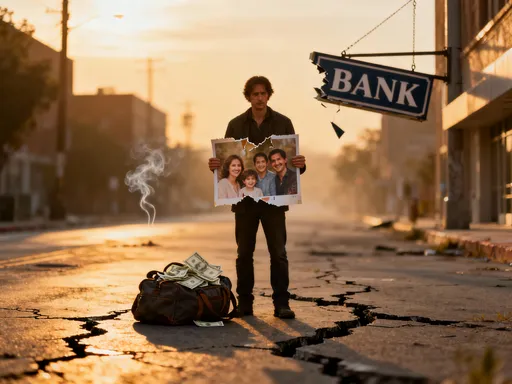
The ground began to tremble just after dawn. At first, it felt like a truck passing by, but within seconds, the walls cracked, lights flickered, and the television went dark. Within minutes, our neighborhood lost electricity, and within hours, the water pressure dropped to nothing. The earthquake wasn’t the deadliest on record, but its aftermath revealed a deeper vulnerability—my financial life was built on systems that could vanish in an instant. The local bank branch had structural damage, and its doors remained closed for over a week. Online banking was inaccessible because the internet towers were damaged, and cell service was spotty at best. I had money in savings, retirement accounts, and a brokerage fund, but none of it could buy me a bottle of clean water or a flashlight with working batteries.
What struck me most was the silence from my financial advisors. No email, no automated message, no emergency protocol. The investments I had trusted to grow quietly over decades were frozen, untouchable, and irrelevant in the face of immediate survival needs. I had to borrow cash from a neighbor to buy supplies at an overburdened grocery store that only accepted physical bills. That moment was humbling. I realized I had optimized for long-term growth but neglected short-term resilience. My portfolio was diversified across stocks, bonds, and mutual funds, yet it offered no protection when liquidity meant survival. The lesson was brutal but clear: financial security isn’t just about asset value—it’s about access, timing, and form.
This wasn’t a failure of investing, but of imagination. I had assumed that markets would remain open, that digital infrastructure would hold, and that institutions would function as usual. But disasters don’t care about assumptions. They expose dependencies. In those first chaotic days, I saw families bartering canned goods, people trading old jewelry for fuel, and elderly residents waiting in vain for pension deposits that never arrived. The financial system, for all its sophistication, had no backup plan for when the lights went out. My crisis wasn’t unique—it mirrored experiences from hurricanes in coastal towns, wildfires in rural areas, and floods in urban centers. Each time, the pattern repeats: people discover too late that wealth locked in digital or long-term forms is of little use when the present demands immediate solutions. This realization became the foundation of a new approach—one where preparedness is not an afterthought, but a core principle of financial planning.
Rethinking Investment Philosophy: Beyond Growth at All Costs
For years, the dominant message in personal finance has been simple: maximize returns. Whether through stock market gains, real estate appreciation, or high-yield savings accounts, the goal has been growth—often at the expense of other considerations. I followed that path faithfully, reinvesting dividends, chasing compound interest, and trusting that time in the market would outweigh all risks. But the earthquake forced me to ask a different question: what good is growth if you can’t access it when you need it most? That shift in perspective changed everything. I began to see that investing isn’t just about building wealth for the future; it’s about ensuring stability in the present, especially when the future is uncertain.
Consider the analogy of building a house. You wouldn’t construct a grand mansion on unstable ground, no matter how beautiful the design. Yet that’s exactly what many of us do with our finances—we stack returns on top of fragile foundations. A portfolio heavy in equities may perform well in bull markets, but during a crisis, it can become a liability if selling assets triggers losses or if markets are frozen. Similarly, retirement accounts like 401(k)s or IRAs offer tax advantages, but early withdrawals come with penalties, making them impractical in emergencies. The pursuit of high returns often leads to overconcentration in complex, illiquid, or system-dependent instruments—precisely the kind that fail when infrastructure breaks down.
The alternative is not to abandon growth, but to balance it with resilience. This means designing a financial structure that can withstand shocks without collapsing. It means valuing stability, accessibility, and simplicity as much as yield. For instance, holding a portion of savings in low-risk, easily accessible forms isn’t a sign of conservatism—it’s a form of insurance. It’s like having a fire extinguisher in your home: you hope never to use it, but its presence provides peace of mind. Similarly, maintaining some assets outside the digital banking system isn’t distrustful—it’s prudent. The goal shifts from “How much can I earn?” to “How much can I rely on, no matter what?” This philosophy doesn’t reject ambition; it redefines it. True financial success isn’t just reaching a net worth target—it’s knowing you can weather any storm without losing your footing.
The Hidden Risk No One Talks About: Liquidity in a Crisis
Liquidity is often misunderstood. In financial terms, it refers to how quickly an asset can be converted into cash without losing value. Stocks are considered liquid because they can be sold quickly. Savings accounts are liquid because you can withdraw funds with a few clicks. But this definition assumes functioning markets, working ATMs, and reliable internet connections—conditions that disappear during disasters. The real test of liquidity isn’t in normal times, but in emergencies, when the difference between “technically liquid” and “practically accessible” becomes a matter of survival.
After the earthquake, I learned this the hard way. My brokerage account showed a healthy balance, but trading was suspended due to market volatility. My bank’s online platform was down for 72 hours. Even when service resumed, transaction limits and fraud alerts blocked large withdrawals. I had “accessible” funds on paper, but in reality, I was cash-poor. Meanwhile, a friend who kept a small amount of physical cash in a fireproof box was able to buy supplies, help neighbors, and even support her elderly parents. That simple act of holding tangible money made all the difference. It wasn’t about the amount—it was about availability when it mattered most.
This experience revealed a critical gap in conventional financial advice: most strategies assume continuity. They don’t account for blackouts, cyberattacks, or natural disruptions that sever access to digital systems. A diversified portfolio means little if every asset requires online access to liquidate. Even gold ETFs or cryptocurrency, often touted as crisis hedges, depend on functioning exchanges and internet connectivity. In a true breakdown, the most “liquid” assets may be the ones you can hold in your hand: cash, coins, or even portable valuables like jewelry or tools that can be traded. The lesson is clear: liquidity planning must include offline options. It’s not enough to have money—you need to be able to use it, regardless of external conditions. That means rethinking what “access” really means and designing systems that work even when the grid doesn’t.
Building Your Financial Safety Net: Cash, Assets, and Access
Resilience begins with preparation. One of the most effective steps I took after the earthquake was establishing a physical financial safety net. This doesn’t mean hoarding cash under a mattress, but rather creating a deliberate, secure system for holding accessible resources. I now keep a modest amount of cash in small denominations in a fireproof and waterproof container at home. The amount is enough to cover a week’s worth of essentials—food, water, medicine, fuel—but not so much that it creates a theft risk. I rotate the bills every few months to prevent deterioration and ensure they remain spendable. This isn’t an investment; it’s an emergency tool, like a first-aid kit or a backup generator.
Beyond cash, I diversified my asset types to include non-digital holdings. This includes holding physical certificates for certain investments, maintaining paper records of account numbers and passwords, and keeping a portion of savings in institutions outside my immediate region. For example, I opened a secondary checking account with a national credit union that operates in multiple states. If local branches are damaged or offline, I can still access funds through other locations or ATMs. I also use prepaid debit cards loaded with emergency funds, which can be used even when online banking is down. These tools aren’t meant to replace traditional banking, but to provide redundancy. Just as a building has backup power, your finances should have backup access.
Geographic diversification is another layer of protection. I moved a portion of my savings to a financial institution in a different region, reducing my dependence on local infrastructure. This doesn’t mean abandoning local banks—I still support them—but it means not putting all my access points in one place. I also keep a printed emergency financial plan in a secure location, listing account details, emergency contacts, and instructions for family members. In a crisis, stress impairs memory; having clear, offline information can prevent costly mistakes. These steps aren’t complicated or expensive, but they create a web of resilience that can hold when individual threads break. The goal isn’t to predict every disaster, but to ensure that no single failure can collapse your entire financial life.
Risk Control as a Core Strategy, Not an Afterthought
Traditional investing often treats risk as something to minimize for the sake of returns—a necessary evil, not a central focus. Diversification is recommended, but usually in terms of asset classes: stocks, bonds, real estate. Rarely is it applied to access, infrastructure, or system dependency. Yet the earthquake showed me that the greatest risks aren’t always market-driven. They come from overreliance on single points of failure: one bank, one network, one form of access. When those fail, even a well-diversified portfolio can become unusable.
That’s why I now treat risk control as a proactive strategy, not a defensive measure. Instead of waiting for a crisis to expose vulnerabilities, I build safeguards into my routine. I split my liquid savings across multiple accounts, ensuring that no single outage can freeze all my cash. I maintain offline records of passwords, account numbers, and identification documents in a secure location. I practice “digital minimalism” by reducing dependence on apps that require constant connectivity. These aren’t one-time actions, but ongoing habits—small investments in stability that compound over time.
The mindset shift is crucial. Protecting your wealth isn’t about fear or pessimism; it’s about responsibility. Just as you wouldn’t drive without a seatbelt, you shouldn’t manage money without safeguards. Risk control isn’t the opposite of growth—it enables it. When you’re not constantly worried about collapse, you can make calmer, more rational decisions. You’re less likely to panic-sell in a downturn or make desperate moves in a crisis. By treating risk as a core component of strategy, you create a foundation that supports long-term success. It’s not about avoiding risk entirely—that’s impossible—but about managing it wisely, so it doesn’t manage you.
Smart Moves for Beginners: Starting Small, Thinking Big
If you’re just beginning to think about financial resilience, the idea can feel overwhelming. You might assume it requires large sums, complex planning, or expert knowledge. But the truth is, resilience starts with small, manageable steps. The most important thing isn’t how much you have, but how you structure what you do have. Begin by assessing your current access points: how would you get cash if ATMs were down for a week? Could you pay bills if the internet went out? Who would manage your finances if you were unable to act? These aren’t hypotheticals—they’re essential questions for anyone seeking true security.
A good starting point is to create a 72-hour emergency fund in physical cash. Start small—$100 or $200 in small bills, stored securely. It won’t cover everything, but it can bridge the gap until systems recover. Pair this with a simple emergency plan: write down account information, emergency contacts, and basic instructions. Keep copies in multiple locations, including with a trusted family member. Next, consider opening a secondary bank account with a different institution, preferably one with a broader network. Even transferring a small amount each month builds redundancy over time.
Be cautious of common pitfalls. High-yield online savings accounts offer great returns, but they often lack local branches, making access difficult in a regional crisis. Similarly, investments in illiquid assets like real estate or private equity may grow over time, but they can’t help in an immediate emergency. The key is balance: pursue growth, but not at the expense of accessibility. Set clear priorities—for example, “I will accept a slightly lower return for an account that offers in-person service.” Progress, not perfection, is the goal. Every step you take strengthens your foundation. Over time, these small choices compound into real resilience.
A New Kind of Wealth: Security, Peace, and Preparedness
The earthquake didn’t just change my finances—it changed my definition of wealth. Before, I measured success by account balances, investment returns, and net worth. Now, I measure it by peace of mind. I sleep better knowing that even if the worst happens, I have options. I no longer feel helpless in the face of uncertainty. This shift has brought unexpected benefits: I make calmer financial decisions, I’m less reactive to market swings, and I feel more in control of my future. True financial strength isn’t about having the biggest portfolio—it’s about having the confidence to face whatever comes.
Preparing for disaster didn’t make me paranoid—it made me prepared. And preparation is empowering. It means I can help my family, support my community, and recover faster if crisis strikes. It means I’m not just surviving—I’m standing on solid ground. The lessons I learned the hard way are now part of a new financial philosophy: one that values resilience as much as return, access as much as accumulation, and peace as much as profit. This isn’t about fear. It’s about freedom. Freedom from panic. Freedom from helplessness. Freedom to move forward, no matter what happens. That’s the kind of wealth worth building.