More than storage: How cloud files quietly changed my daily routine
Have you ever lost a file before an important moment? I have—more than once. It wasn’t until I started using cloud storage as part of my daily habits that things finally clicked. It’s not just about saving documents; it’s about creating a seamless flow in your day. Now, I access what I need, when I need it, without stress. This small shift didn’t just organize my files—it organized my mind.
The Morning Chaos That Started It All
Let’s set the scene: It’s 7:15 a.m. The kids are arguing over breakfast, the dog needs a walk, and I’m trying to find a presentation I spent hours on last night. I remember saving it—somewhere. Was it on my laptop? My tablet? Did I email it to myself and forget to open it? I frantically click through folders, my heart racing. Meanwhile, my youngest is asking for a note for her lunchbox, and I realize I forgot to write one. The coffee spills. Of course it does. That morning, I walked out the door late, flustered, and defeated—not because I didn’t work hard, but because my systems were failing me.
Sound familiar? I used to think this kind of chaos was just part of being a busy woman, a mom, a partner, a professional. But the truth is, it wasn’t the busyness that overwhelmed me—it was the fragmentation. My files lived in different places. My to-dos were scribbled on sticky notes that vanished. My calendar was split between my phone and a paper planner I rarely updated. I was juggling too many mental balls, and I was dropping them all.
The real turning point came when I missed a deadline—not because I didn’t do the work, but because I couldn’t find the final version of a document. That’s when I admitted I needed more than willpower. I needed a system that worked with my life, not against it. I wasn’t looking for a tech revolution. I just wanted to stop losing things.
Discovering Cloud Storage Beyond Backup
Like many of us, I first heard about cloud storage as a backup solution. You know the pitch: “Protect your photos in case your phone dies.” And sure, that’s valuable. But I didn’t see how it could change my daily rhythm—until I saw it in action.
One day, I was at the grocery store with a friend, and she pulled out her phone to check a shared shopping list. I watched as she added “avocados” and—within seconds—I saw it pop up on my phone too. No text, no email, no confusion. It just… happened. I stood there, stunned. “How did you do that?” I asked. She laughed and said, “It’s just the cloud. Everything updates everywhere.”
That moment clicked something in my brain. This wasn’t just about saving files “just in case.” It was about making my life flow. I realized I didn’t need another app or another reminder—I needed everything to live in one place that followed me. So I started small. I created a simple to-do list in a cloud-based document. I saved it online, not on my device. Later that day, I opened my laptop to work—and there it was, already waiting for me. No transfer, no upload, no stress. It felt like magic, but it wasn’t. It was just smart design.
That tiny win gave me hope. If a grocery list could sync, why not everything else?
Turning Daily Tasks into Effortless Routines
Once I saw what was possible, I began moving more of my daily routines into the cloud. I started with meal planning—something I always meant to do but never stuck with. Before, I’d write a plan on paper, lose it by Wednesday, and end up scrambling for dinner ideas. Now, I keep a shared document titled “This Week’s Dinners.” I update it on my phone while I’m folding laundry or waiting in the car line. And because it’s in the cloud, my partner can see it from his phone. He knows what’s for dinner. He can check what we need from the store. No more repeating myself. No more surprise takeout.
I did the same with my workout log. I used to track my progress in a notebook I’d leave at the gym. Now, I open a cloud file on my phone right after class and jot down what I did. It’s not fancy—just a few lines. But seeing my consistency build over weeks has been surprisingly motivating. And because it’s online, I can look back from home and celebrate small wins: “I did three workouts this week. That’s progress.”
Even my kids’ school projects moved to the cloud. When my daughter had to write a report on sea turtles, I created a shared document where she could draft her ideas. I added feedback in comments, and her teacher could view it too. No more emailing drafts back and forth. No more “Mom, where’s my USB drive?” It became a living document—edited, improved, and saved in real time.
These changes didn’t feel like a tech overhaul. They felt like relief. The mental clutter I used to carry—the constant “Where did I save that?”—started to fade. I wasn’t just organizing files. I was organizing my energy.
Goal Tracking That Actually Sticks
I’ve always been a goal setter. I love the idea of growth, of becoming a better version of myself. But my follow-through? Not so great. I’ve filled notebooks with intentions: “Drink more water.” “Read 20 minutes a day.” “Start a side hustle.” Most of them were abandoned by February.
The problem wasn’t the goals. It was the system. My journals lived on a shelf. I’d forget to open them. Or I’d write once and never return. They felt static—like relics of motivation, not tools for progress.
Then I tried something different. I created a cloud-based goal tracker—a simple document with three sections: monthly intentions, weekly check-ins, and “tiny wins.” I didn’t overdesign it. No fancy charts. Just plain text. But because it lived online, I could access it anytime. While waiting for my son’s soccer practice to end, I’d pull it up and write: “Drank water at lunch. Read five pages.” It took 30 seconds. But those small updates kept me connected to my goals.
Something shifted when I could see my progress in real time. Checking off “meditated for five minutes” on Wednesday made me more likely to do it on Thursday. And because the file was always with me, I didn’t lose momentum. I wasn’t waiting to get home to “remember” what I’d done. It was all there—alive, evolving, visible.
The real breakthrough? I stopped seeing goals as all-or-nothing. Missing a day didn’t mean failure. I could just note it and keep going. The cloud didn’t judge. It just held space for me to try, adjust, and continue. For the first time, my goal tracking felt sustainable.
Sharing Without the Stress
Family life is a team sport. But coordinating schedules, sharing updates, and managing responsibilities used to feel like a part-time job. I was the default communicator—calling my partner to remind him about appointments, texting my mom to share photos, emailing school forms to teachers. I was the hub, and when I forgot something, the whole system wobbled.
Then I created shared cloud folders for the first time. I made one for household bills—uploading insurance documents, utility statements, and tax records. My partner can access it from his phone. He reviews what he needs and adds notes. No more printing things out. No more “Where’s that paper we got last month?”
I made another folder for family memories. Instead of letting photos stay buried in my phone, I started uploading our favorites—birthday parties, holiday moments, silly pet videos. I invited my sister and parents to view it. Now, they add their own photos too. Last week, my mom uploaded a throwback picture of me as a kid. I smiled when I saw it. It wasn’t just storage—it was connection.
And for vacations? Game changer. I created a folder for our summer trip: flight details, hotel confirmations, packing lists, and a shared itinerary. My partner added activity ideas. My teenage daughter dropped in restaurant recommendations. We all updated it in real time. No more group texts with conflicting information. No more last-minute surprises. We were aligned, informed, and excited—together.
Sharing used to feel like a burden. Now, it feels like a gift. The cloud isn’t replacing our conversations. It’s making them better by removing the friction.
How It Quietly Boosted My Confidence
Here’s something I didn’t expect: using the cloud regularly made me feel more capable. Not because I became a tech expert—but because I stopped feeling behind. I walk into parent-teacher conferences knowing I can pull up my child’s reading log. I join work calls without that knot in my stomach, wondering if my slides are on the right device. I help my son with his science project without scrambling to find the research we saved last week.
There’s a quiet confidence that comes from reliability. When you know your systems work, you trust yourself more. I started saying “yes” to things I would’ve avoided before. A friend asked me to co-lead a community workshop. I almost said no—what if I couldn’t keep track of the materials? But then I realized: I could store everything in a shared folder. I could collaborate in real time. I could access it from anywhere. So I said yes. And it went beautifully.
I even started a small online course I’d been dreaming about for years—a guide to mindful parenting. I used to think I’d never have the organization to pull it off. But now, I keep all my notes, outlines, and recordings in a private cloud folder. I update it during quiet mornings or while waiting at the dry cleaner. It’s not perfect, but it’s moving forward. And that’s enough.
The cloud didn’t give me more time. But it gave me more peace. And peace? That’s the foundation of confidence.
Making It Work for Your Life (Not the Other Way Around)
I’ll be honest—I used to think cloud storage was for tech-savvy people or people with “real” jobs. I thought I needed to understand terms like “sync frequency” or “encryption.” But here’s the truth: you don’t. You just need one folder and one habit.
Start small. Pick one part of your life that feels messy. Is it your weekly meal plan? Create a document. Save it to the cloud. Update it from your phone. Let it evolve. Is it your budget? Make a simple spreadsheet. Add your income and expenses. Open it from your tablet while you’re reviewing bills. No need for fancy formulas. Just consistency.
Or maybe it’s your family’s schedule. Create a shared calendar linked to your cloud account. Add doctor appointments, school events, and weekend plans. Invite your partner to edit it. Watch how much easier coordination becomes. You’ll stop double-booking. You’ll stop forgetting.
The key is to let the tool serve you—not the other way around. You don’t need to move everything at once. You don’t need to master every feature. Just pick one thing that matters to you and give it a home in the cloud. Let it live there. Nurture it. Watch how it simplifies your decisions.
Over time, this small habit ripples outward. You’ll find yourself thinking, “Could this go in the cloud too?” And the answer is often yes. But the goal isn’t to digitize your entire life. It’s to create space—space for calm, for focus, for what really matters.
Conclusion
It’s easy to overlook cloud storage as just another tech tool, something for IT departments or startup founders. But when woven into the fabric of daily life, it becomes something deeper. It’s a quiet force that reduces friction, supports growth, and brings order to chaos. It didn’t change my life overnight. But it made each day a little easier, a little clearer, a little more manageable.
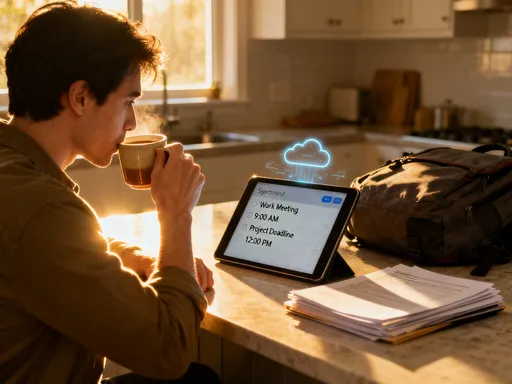
Now, when I sit down with my morning coffee, I don’t dread the day’s to-dos. I open my cloud dashboard and see everything in its place. My meal plan. My goals. My family’s schedule. It’s not perfection. It’s progress. And that’s enough.
Technology doesn’t have to be flashy to be powerful. Sometimes, the most transformative tools are the ones that work silently in the background—freeing us to focus on what we care about most: our families, our dreams, and the quiet joy of a day that flows just a little more smoothly.