Tested 7 smart smoke alarms in 6 months: The one that gave me back peace of mind
You know that nagging worry—did I turn off the stove? Is the dryer still running? As someone who values both safety and sanity, I spent months testing smart smoke alarms, not just for their alerts, but for how they fit into real life. Turns out, the right one doesn’t just beep—it blends in, watches over your home, and quietly frees up mental space. This is how I found the device that finally made safety feel effortless. It didn’t shout for attention. It didn’t wake me up at 3 a.m. for a burnt toast incident. Instead, it worked—consistently, quietly, and with a kind of calm reliability that changed how I move through my days. If you’ve ever paused at the top of the stairs, wondering if you left something on, this story is for you.
The Hidden Mental Load of Home Safety
Let’s talk about something most of us don’t talk about enough: the quiet, constant hum of worry that lives in the back of a caregiver’s mind. It’s not dramatic. It doesn’t come with sirens. But it’s there—especially when you’re the one who remembers to check the carbon monoxide detector, who resets the circuit breaker, who double-checks the oven before locking the door. For years, I thought this was just part of being responsible. I’d slap a new battery into the smoke alarm when it chirped, pat myself on the back, and move on. But deep down, I wasn’t sure if the system was really working. Were all the alarms connected? Would I hear one go off from the basement? What if the kids didn’t wake up?
This isn’t paranoia—it’s awareness. And it’s heavier than we admit. Studies show that mental load, especially in household management, disproportionately falls on women, often without recognition. We carry the invisible checklist: Did I pack lunches? Did I confirm the dentist appointment? Did I remember to test the smoke alarms? And yet, testing them? That usually happens only when the battery dies, late at night, in that annoying, rhythmic beep that feels personal. By then, it’s not proactive safety—it’s reactive stress. I realized I wasn’t just managing a home; I was managing anxiety disguised as routine. That’s when I started asking: What if technology could actually lighten this load instead of adding to it?
Because here’s the truth—owning a smoke alarm isn’t the same as trusting it. And trust? That’s priceless. I didn’t want something flashy or complicated. I wanted something that worked so well, I could stop thinking about it. That’s the real goal, isn’t it? Not just safety, but peace. And that’s what sent me on a six-month journey to test seven different smart smoke alarms, not in a lab, but in the messy, beautiful reality of my home.
Why I Started Testing Smart Smoke Alarms
It started with a 2:47 a.m. wake-up call. The kind that makes your heart jump before your brain even boots up. One of the old alarms in the hallway was chirping—not a full alarm, just that low, persistent beep that says, ‘I’m dying, and I want you to suffer with me.’ I fumbled for the flashlight, climbed the step stool, and changed the battery, grumbling about how this always happened at the worst time. But as I stood there, rubbing sleep from my eyes, I had a thought: Why is safety this hard? Why does a device meant to protect us feel so… inconvenient?
I’ve always been practical. I work from home part-time, help manage my aging parents’ schedules, and try to keep up with my teens’ ever-changing routines. My days are full, but not in a chaotic way—more like layers of responsibility that require constant attention. So when something adds friction instead of flow, I notice. And that chirping alarm? It wasn’t just a sound. It was a symbol of how many small tasks pile up, stealing moments from what really matters.
That morning, I started researching smart smoke alarms. Not because I wanted to be a tech expert, but because I wanted to be free. Free from the anxiety of false alarms. Free from the guilt of neglecting maintenance. Free from the mental clutter of ‘did I check it?’ I didn’t need more notifications—I needed fewer. I wanted a system that worked in the background, like good insurance: there when I needed it, invisible when I didn’t.
So I made a plan. Over the next six months, I would test seven of the most popular smart smoke alarms on the market. I’d install them in different parts of the house—kitchen, hallway, basement, bedrooms—and live with them. Not just for a week, but long enough to see how they held up during real life: cooking experiments, overnight guests, power outages, and even a minor kitchen mishap (burnt popcorn, of course). I’d evaluate them not just on specs, but on how they made me *feel*. Calm? Stressed? Connected? Overwhelmed? This wasn’t a lab test. It was a life test.
What Most Reviews Miss: Real-Life Integration
If you’ve read tech reviews online, you know they love numbers: decibel levels, sensor types, battery life. And yes, those matter. But what most reviews don’t talk about is how a device *feels* in your home. Does it fit? Does it fade into the background, or does it demand attention? I learned quickly that the most feature-packed alarm wasn’t always the best one. In fact, some of the most advanced models created more stress than they solved.
Take the first one I tried. It had a sleek design, a companion app, and voice alerts. Great, right? Except the app sent me a notification every time it did a self-test. That’s four times a day. Four little pings on my phone, reminding me it was ‘checking in.’ By day three, I was tempted to uninstall the app. I didn’t want a needy device. I wanted a reliable one. And when I burned a grilled cheese (yes, it happens), the alarm went off not just in the kitchen, but in every room, waking the kids and the dog. It was effective—but not thoughtful.
Another model had a beautiful interface, but the installation was a nightmare. I needed a drill, a voltage tester, and the patience of a saint. I ended up calling my brother-in-law, who shook his head and said, ‘You shouldn’t need a degree to install a smoke alarm.’ He was right. If a safety device is too complicated to set up, how many people skip it altogether? And what about renters? Or those living in older homes with outdated wiring? Technology should adapt to life, not the other way around.
Then there was the one that promised ‘smart silence’—a feature where you could wave your hand under it to hush a false alarm. Sounds convenient, until you’re in your pajamas, waving frantically at the ceiling while smoke from the toaster still lingers. It didn’t feel smart. It felt silly. And worse, it didn’t always work. I started doubting it during real moments of uncertainty. That’s the opposite of what a safety device should do.
What I realized is this: integration is everything. A smart alarm shouldn’t add steps. It shouldn’t require a manual. It should work with your life, not against it. I began to value simplicity over specs, reliability over bells and whistles. I wanted something that didn’t make me think. Something that just… worked.
The Winner: A Device That Feels Invisible (in the Best Way)
Out of the seven, one stood out—not because it had the most features, but because it asked for the least attention. It’s made by a well-known brand that focuses on home safety, and while it doesn’t dominate headlines, it’s built with quiet confidence. The moment I unboxed it, I noticed the difference: clear instructions, color-coded wiring, and a mounting system that snapped into place without tools. I installed it myself in under ten minutes, no ladder, no guesswork.
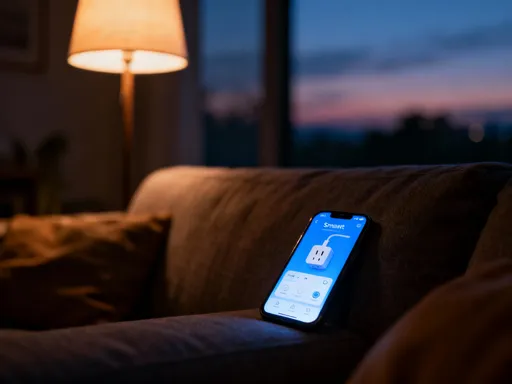
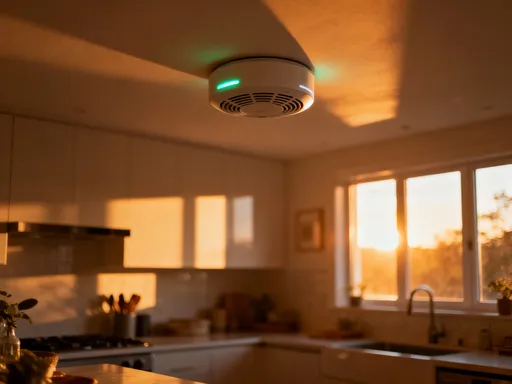
The app was simple—just three tabs: Home, Alerts, and Settings. No clutter. No constant pings. When I tested it, the alarm sounded once, clearly, and the app notified me within seconds. But here’s what changed everything: the status light. A soft green glow on the front of the unit. That’s it. No blinking. No mystery. If I walked down the hall at night and saw that green light, I knew everything was okay. No mental check needed. No second-guessing. Just calm.
And the alerts? They were smart. Not loud, not frequent, but meaningful. When the battery was low, I got one notification—three days before it actually died. When it completed its weekly self-test, I didn’t get a ping. It just… did it. But if smoke was detected, the alarm was loud and clear, and the app sent an immediate alert to my phone, even when I was at the grocery store. I tested it during a weekend trip, and within seconds, I got the alert. I could silence it remotely if needed, but I didn’t have to—because it also had a built-in feature that distinguished between cooking smoke and real danger. A quick wave of the hand (this time, it worked) silenced a minor kitchen scare without disabling the entire system.
What made it truly special was how it disappeared. I stopped thinking about it. I didn’t dread the battery change. I didn’t wake up anxious. It wasn’t perfect—no device is—but it was *trustworthy*. And that, more than any feature, was what I needed.
How It Changed My Daily Rhythm
You’d think a smoke alarm wouldn’t change your life. But small shifts create big ripples. The first thing I noticed was how much quieter my mind felt. I used to walk into the kitchen and immediately check the stove. Did I turn it off? Did I leave the pot on? Now, I don’t. Not because I’m careless—but because I *know*. If something were wrong, I’d already know. That tiny freedom—of not having to double-check—added up.
Those saved moments didn’t just vanish. They became space. Space to pour my coffee and actually taste it. Space to sit with my daughter during breakfast and really listen. Space to start a journaling habit I’d been putting off for years. I began writing five minutes every morning, not because I had more time, but because I had more mental clarity. The constant background noise of ‘what if?’ had faded.
I even picked up painting again. I used to love it, but life got busy. Now, on Sunday afternoons, I set up my easel in the living room. And when I’m lost in the colors and brushstrokes, I’m not wondering if the oven is on. I’m present. Fully. That’s a gift—not just from the device, but from the peace it gave me.
It’s funny how safety can become a gateway to joy. When you’re not managing fear, you have room for creativity. When you’re not burdened by mental load, you can breathe. This alarm didn’t just protect my home. It protected my time, my focus, my energy. And in doing so, it helped me show up better—for my family, for myself.
Making Time Without Adding Tasks
Here’s a secret no one talks about: the right technology doesn’t add to your to-do list—it erases it. Before, I’d mark ‘test smoke alarms’ on my calendar every six months. And every time, it was a production. Get the ladder. Walk room to room. Press the button. Hope it works. With the smart system, it tests itself—every week. I don’t have to do anything. The app quietly logs each test, and if something fails, I get one clear alert.
Battery changes? No more surprise beeps. The system tells me months in advance when the sealed battery will need replacement—these models use long-life batteries, so you’re not swapping them every year. And because it’s interconnected, if one alarm goes off, they all do. No more worrying about whether the basement alarm can wake you up from the second floor.
But the real gift was the end of false alarms. No more waking up to a blaring siren because someone took a hot shower. No more evacuating the house over steam from a boiling pot. The advanced sensors detect real threats, not humidity or cooking fumes (unless it’s actual smoke). That means fewer interruptions, less stress, and more trust in the system.
I started to see these saved moments as ‘invisible time’—not extra hours, but reclaimed fragments. The three minutes you don’t spend climbing a ladder. The five minutes you don’t waste calming down after a false alarm. The mental energy you don’t spend worrying. That time adds up. And when you’re a woman juggling a hundred things, those fragments are gold. I used them to read, to stretch, to call a friend. Small joys, made possible by a small device.
Peace of Mind as the Ultimate Upgrade
Looking back, I realize I wasn’t just testing smoke alarms. I was testing a promise: that technology could make life easier, not busier. That it could give back more than it takes. And it did. The real upgrade wasn’t in decibels or app features. It was in the quiet moments—sitting on the porch with my tea, knowing the house is safe. It was in the deep sleep, uninterrupted by chirps or fears. It was in the confidence to leave for a weekend trip without texting my neighbor to ‘keep an ear out.’
This device didn’t just alert me to danger. It gave me permission to relax. To trust. To live. And in a world that constantly asks us to do more, be more, check more, that’s revolutionary. I’m not just safer. I’m freer. My home feels more like a sanctuary, not a checklist.
So if you’re reading this and thinking, ‘I’ll get to it later,’ I get it. We’re all busy. But here’s what I’ve learned: the best investments aren’t the ones that save money. They’re the ones that save your mind. A smart smoke alarm isn’t a gadget. It’s a guardian. It’s a quiet partner in your daily life, working behind the scenes so you don’t have to.
I didn’t set out to become a tech tester. I just wanted to stop worrying. And in finding a device that works as hard as I do, I found something unexpected: more room to breathe, to create, to be present. That’s not just smart technology. That’s human-smart. And if you’re carrying that quiet weight of responsibility, I hope you’ll consider giving yourself that same gift—peace of mind, one trusted alert at a time.